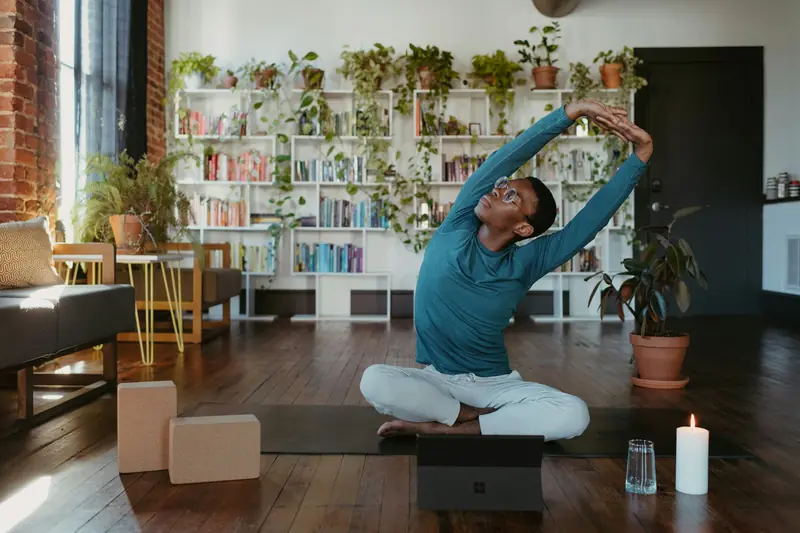
Home practice
How to Create a Comfortable Yoga Space at Home
You don't need a spare room to practise yoga at home. How to choose a spot, set it up safely and make it a space you actually want to use.
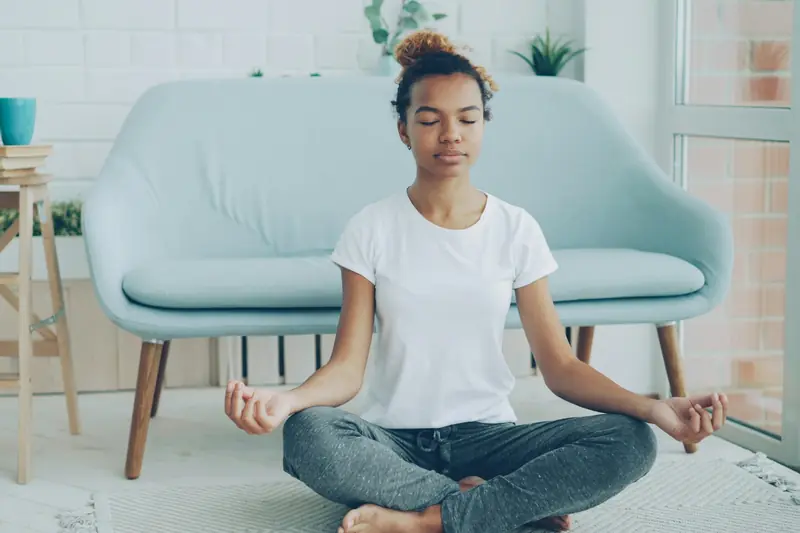
One of the nicest things about practising yoga at home is that you can make the space your own. You don't need a dedicated studio or a spare room. With a little thought, a corner of a living room, bedroom or even a hallway can become somewhere you enjoy returning to.
Here is how to set up a home yoga space that is comfortable, practical and safe.
How much space do you need?
For most classes, you need an area about the size of a yoga mat (roughly 180 by 60 centimetres), plus enough clear space around it to:
- stretch your arms out to both sides,
- reach your arms overhead without touching a light fitting or shelf,
- step one foot back into a lunge, and
- lie down with your arms by your sides.
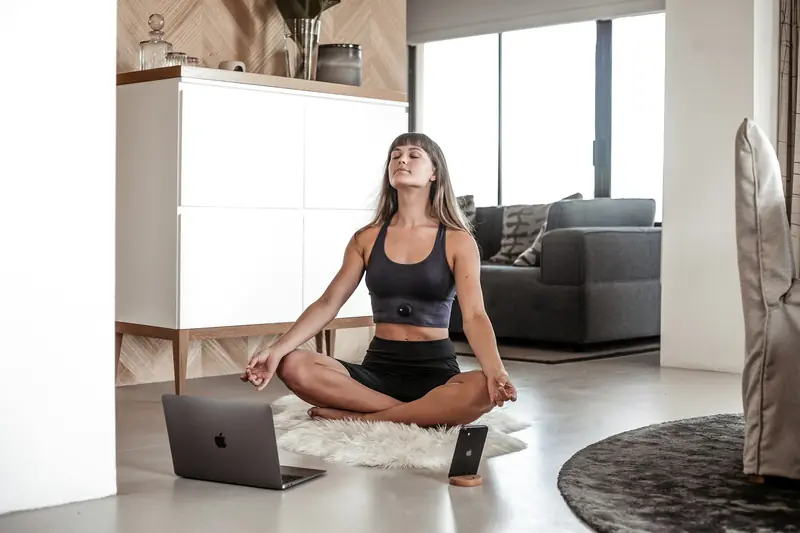
If you take part in live online classes, you will also need room for your laptop, tablet or phone a short distance in front of or beside your mat.
Choosing the right spot
Look for a level, non-slip floor
Wooden floors, laminate and low-pile carpet all work well with a good mat. Very thick or soft carpet can make balance poses wobbly. On a slippery floor, make sure your mat grips well; a rug that slides is a hazard.
Clear the area around you
Move anything you could catch with a hand or foot: coffee tables with sharp corners, plant pots, chargers and trailing cables. If pets or children share the room, a quick check for toys before you begin can save a stubbed toe.
Think about light and temperature
Natural light is pleasant for morning practice, while softer lamplight suits an evening session. Aim for a comfortable temperature: warm enough that you are not stiff and cold, but not so hot that you overheat. Keep a jumper or blanket nearby for the final relaxation, as you can cool down quickly when lying still.
Consider noise and interruptions
A completely quiet home is rare. If you share your space, it can help to let others know when you are practising, or choose a time when the house is calmer. Headphones are useful for online classes in a busy household.
Setting up for online classes
If you are joining classes by video, a few small adjustments make a big difference:
- Position your device so it is stable and at roughly floor-to-hip height, a few steps away from your mat. If your camera is on, your teacher should be able to see your whole body when you are standing and lying down.
- Test your sound before class. Built-in speakers are often fine; a portable speaker can help in larger rooms.
- Charge your device or keep it plugged in, with the cable safely out of the way.
- Check your connection. If your Wi-Fi is weak in one room, try practising closer to your router.
Make it a place you want to be
Your space doesn't need to look like a magazine photo. Still, small touches can make practice feel more inviting:
- Keep your mat and props together in a basket or corner, so setting up takes seconds.
- A plant, a candle (never left unattended) or a favourite blanket can make the area feel calmer.
- If you practise in the same spot regularly, the simple act of unrolling your mat can become a cue that it is time to pause.
Safety checklist
Before each session, take thirty seconds to check that:
- your mat is flat and not slipping,
- the area around you is clear,
- you have water nearby, and
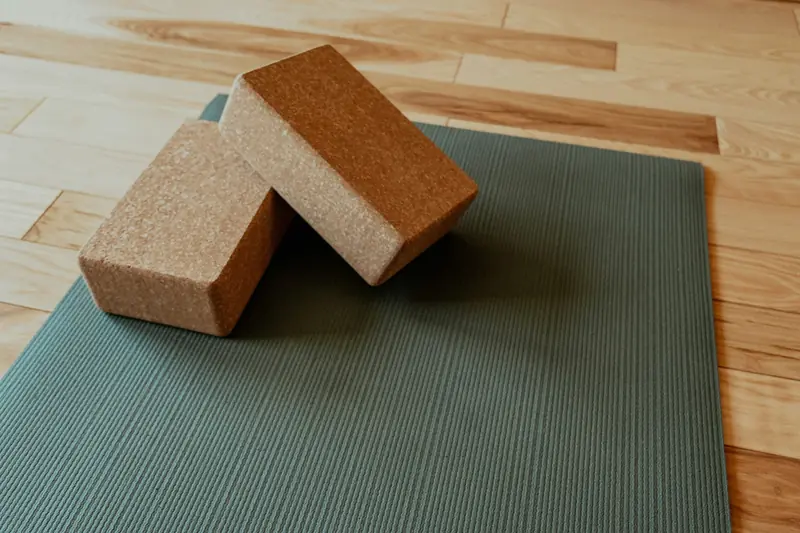
- anything you need (blocks, cushions, a chair for balance) is within reach.
If you use a chair for support, choose a sturdy one without wheels and place it where it will not slide. And remember that the most important safety tool is your own attention: move slowly, and stop if anything hurts. Our yoga safety page has more guidance.
Small spaces and shared rooms
If floor space is tight, you can:
- practise standing poses and seated work rather than flowing sequences,
- try chair yoga, which needs very little room, or
- roll out your mat in a hallway or landing for the length of a class.
What matters most is not the size of the room, but having somewhere you can practise without rushing.
Next steps
Once your space is ready, find a class that suits you. Our beginner yoga classes are a good starting point, or browse all our classes. For a list of useful props, see what equipment you need for home yoga.