Home practice
What Equipment Do You Need for Home Yoga?
A no-nonsense guide to home yoga equipment - what is genuinely useful, what you can improvise with household items, and what to look for in a mat.
Walk into any sports shop and you could easily spend a lot on yoga gear. The good news is that you need very little to practise at home, and much of it can be improvised from things you already own.
Here is what is genuinely useful, what is optional, and what you can skip.
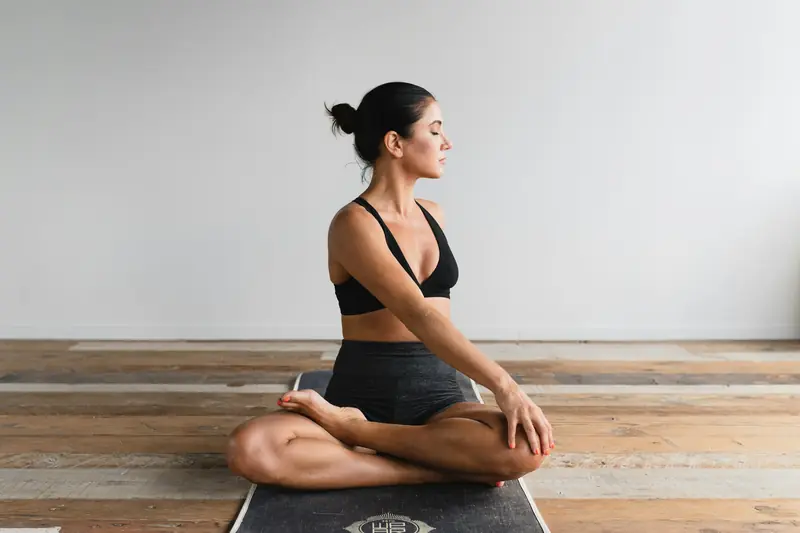
The one thing worth buying: a mat
A good mat stops your hands and feet from slipping and gives a little cushioning for your knees and spine. If you buy just one item, make it this.
What to look for
- Grip. This matters more than anything else. A mat that slides on the floor, or that your hands slide on, makes poses harder and less safe.
- Thickness. Around 4–6 mm suits most people. Thicker mats are kinder to knees but can make balance poses feel less stable.
- Size. Your whole body should fit when lying down. Taller people may want a longer mat.
- Material. Mats are made from natural rubber, cork, PVC, TPE and other materials. Natural rubber tends to grip well but is heavy, and is not suitable for anyone with a latex allergy. Check the label if you have allergies or prefer to avoid certain materials.
No mat yet?
You can try a few classes on a rug that grips the floor, or on carpet. Avoid practising on a towel on a smooth floor or anything that slides.
Useful props (and what to use instead)
Props are not a sign that you are "doing it wrong". They make poses more comfortable and accessible, and experienced practitioners use them all the time.
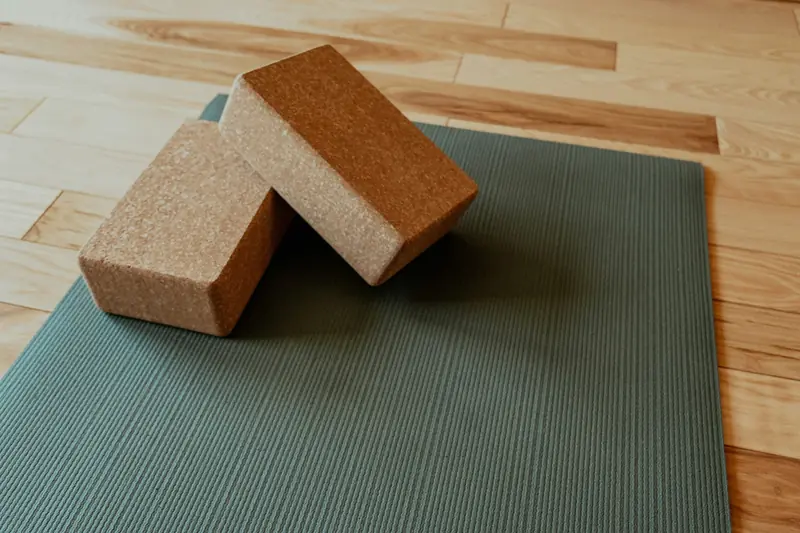
Blocks
Blocks bring the floor closer to you, for example in standing forward folds and lunges, and can be used as a seat.
Instead, try: a stack of firm hardback books, or a firm cushion for seated poses.
A strap
A strap helps you reach your feet in seated or lying stretches without straining.
Instead, try: a dressing-gown belt, a scarf, or a long tie.
A blanket
Useful for padding your knees, sitting on to raise your hips, and keeping warm during the final relaxation.
Instead, try: any folded blanket or large towel.
Cushions or a bolster
Cushions support you in resting poses and make kneeling and sitting cross-legged more comfortable. A bolster is a firmer, longer cushion designed for yoga.
Instead, try: sofa cushions or bed pillows. A rolled-up duvet makes a surprisingly good bolster.
A chair
A sturdy chair is useful for support in standing poses and essential for chair yoga. The NHS suggests using a solid, stable chair without wheels for seated exercises, at a height where your feet can rest flat on the floor, and ideally without arms so you can move freely.
For online classes
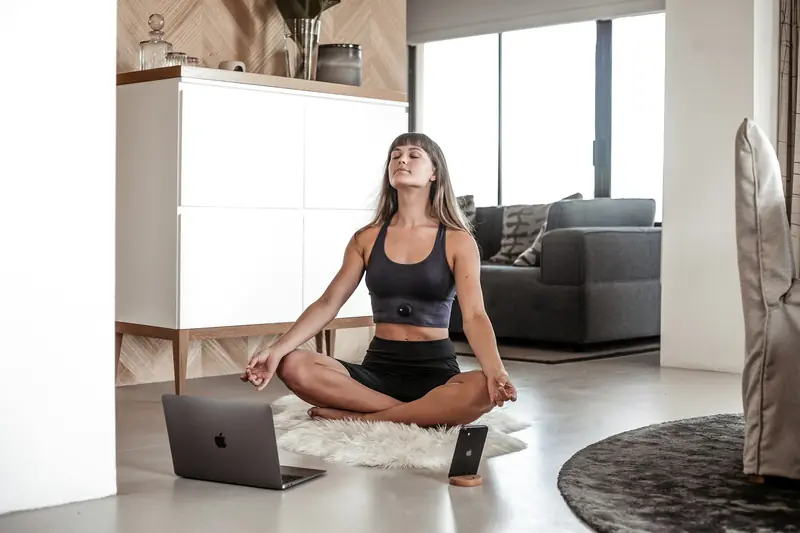
If you join live online classes, you will also need:
- A device (laptop, tablet or phone) with a reliable internet connection.
- A stable place to put it, such as a low table, stool or shelf.
- Sound you can hear clearly, through the built-in speakers, a portable speaker or headphones.
A laptop or tablet is easier to see than a phone, but a phone works well too.
What to wear
Anything comfortable that lets you bend and stretch: leggings, joggers, shorts or loose trousers, with a top that stays put when you fold forward. Most people practise barefoot. If your feet get cold, wear socks for seated and lying poses and take them off for standing poses so you don't slip.
What you can skip
- Special yoga clothing. Comfortable clothes you already own are fine.
- Expensive accessories such as yoga wheels, balls or specialist bolsters, at least until you know what you would actually use.
- Matching sets. Your practice won't feel any different.
A simple starter kit
If you want a short shopping list, this covers almost everything:
- A non-slip mat.
- Two blocks (or firm books).
- A strap (or a belt).
- A blanket you already own.
Everything else can wait.
Next steps
Once you have your kit, set up your practice area using our guide to creating a yoga space at home, then try a beginner class. Each class page lists exactly what you need.