Technique
Gentle Yoga Modifications for Different Ability Levels
Practical ways to adapt common yoga poses with cushions, a chair or a wall - so you can practise comfortably, whatever your experience or mobility.
Every body is different, and every body changes from day to day. A pose that feels easy on Monday might feel uncomfortable on Thursday. Modifying a pose isn't cheating; it is how you make yoga work for you.
This guide covers simple, practical modifications for common poses using things you probably already have at home.
The principles behind any modification
Whatever the pose, the same few ideas apply:
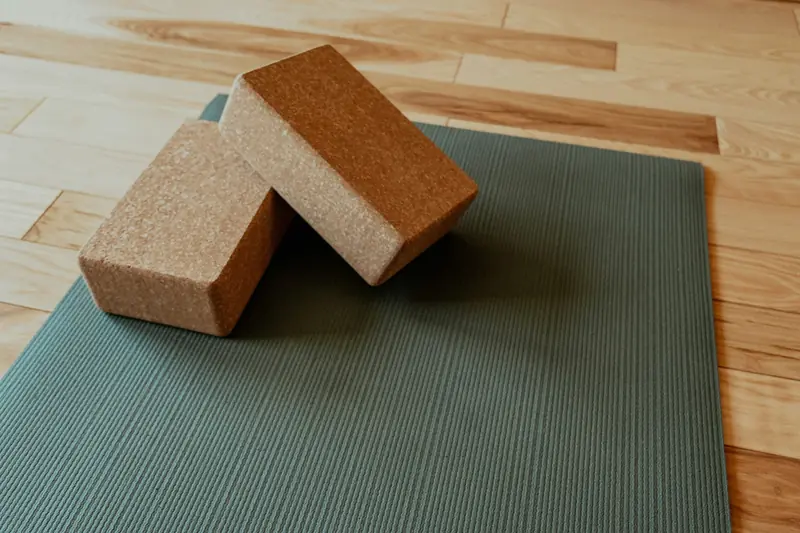
- Bring the floor closer. Blocks, books or a chair seat mean you don't have to reach as far.
- Add support. Cushions, blankets and walls take weight off joints and help with balance.
- Reduce the range. Make the movement smaller. A shallow version done comfortably is better than a deep version done with strain.
- Change the position. Many poses can be done standing, seated in a chair or lying down.
- Shorten the hold. Come out sooner and rest.
Mild stretching sensations are normal. Sharp pain, pins and needles, numbness or dizziness are signals to stop.
Kneeling poses
Poses such as cat-cow and child's pose put weight through the knees.
- Pad your knees with a folded blanket or cushion.
- Try tabletop on your forearms on a chair seat instead of your hands on the floor.
- Do the movement seated: cat-cow works well sitting on a chair with your hands on your knees, gently rounding and lengthening your back.
- For child's pose, place a cushion between your hips and heels, or rest your chest on a stack of pillows. If kneeling isn't comfortable at all, lie on your back and hug your knees towards your chest instead.
Standing balance poses
Balance work is valuable, but it is also where falls can happen.
- Use a wall or the back of a sturdy chair for one or both hands.
- Keep your toes down. In tree pose, rest your lifted heel against your ankle with your toes on the floor.
- Widen your stance in standing poses to make them more stable.
- Practise near something soft, and away from furniture with sharp corners.
Forward folds
Folding forward can be uncomfortable for tight hamstrings or the lower back, and coming up can make some people feel light-headed.
- Bend your knees generously.
- Rest your hands on blocks, a chair seat or your thighs rather than reaching for the floor.
- Fold from a seated position in a chair instead of standing.
- Come up slowly, with bent knees, letting your head come up last.
Getting up and down from the floor
Moving between standing and the floor is one of the biggest barriers for many people.
- Use a chair to lower yourself down and push yourself up.
- Plan your practice to group standing poses together and floor poses together, so you only transition once.
- Choose a chair-based class. Chair yoga keeps the whole practice off the floor.
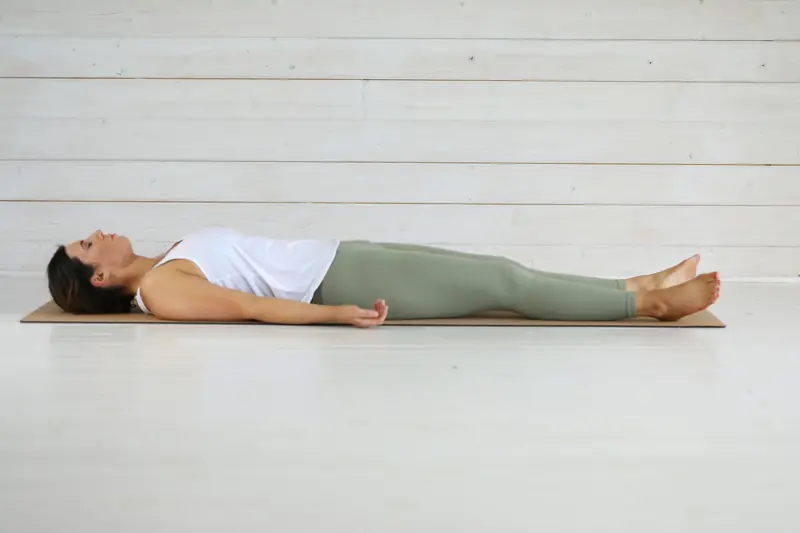
Lying on your back
- Bend your knees with your feet on the floor to take pressure off your lower back.
- Put a pillow under your knees in the final relaxation.
- Support your head with a folded blanket if your chin tips up.
- Rest on your side or semi-reclined if lying flat is uncomfortable, for example later in pregnancy (as advised by your midwife or doctor).
Seated poses
- Sit on a cushion or folded blanket so your hips are higher than your knees. This makes sitting cross-legged much easier.
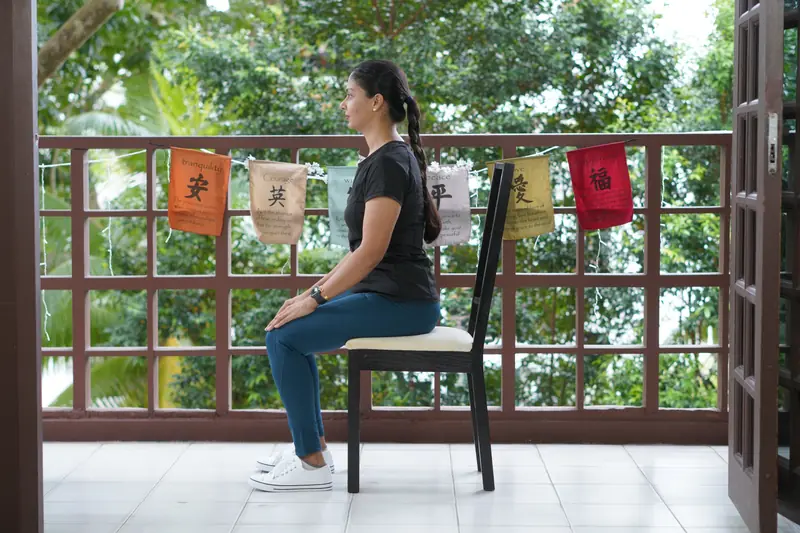
- Sit in a chair with your feet flat on the floor.
- Sit with your back against a wall for support.
Breathing practices
Breathing exercises should feel calm, never forced. If a technique makes you feel light-headed or anxious, return to your normal breathing. Simple, slow belly breathing is a gentle option for most people.
Working with a teacher
A teacher who knows what you need can suggest modifications in real time. When you book, it can help to mention:
- any areas that need extra care,
- whether getting to the floor is difficult, and
- whether you prefer more explanation or more demonstration.
You only need to share what you're comfortable sharing. In a private session, the whole practice is planned around you; in gentle yoga classes, options are offered throughout.
The right version is your version
There is no prize for the deepest stretch. The right version of a pose is the one that lets you breathe steadily and feel stable and comfortable. Over time, what feels right may change, and that is fine too.
Read our yoga safety information for more guidance on practising safely at home.
This article is general information and is not a substitute for individual advice from a qualified healthcare professional.