Technique
Common Beginner Yoga Mistakes and How to Avoid Them
Ten common mistakes new yoga students make - from holding the breath to pushing through pain - and simple ways to practise more safely and comfortably.
Everyone makes mistakes when they start something new, and yoga is no different. Most beginner mistakes are completely harmless and simply part of learning. A few, though, can make practice uncomfortable or increase the chance of strains.
Here are ten of the most common, and how to avoid them.
1. Pushing through pain
Many people assume that a stretch needs to hurt to be "working". It doesn't. A mild pulling sensation is normal. Sharp pain, pinching in a joint, numbness or tingling are signs to ease off straight away.
Instead: find the point where you feel a gentle stretch, then back off slightly. You should be able to breathe steadily and comfortably.
2. Holding your breath
When a pose feels challenging, it is natural to hold your breath without noticing.
Instead: check in with your breath regularly. If you can't breathe smoothly, the pose is probably too intense. Make it smaller or come out and rest.
3. Comparing yourself to others
Whether it's the teacher, someone else on the call or a photo online, comparing your pose to someone else's isn't useful. Bodies vary enormously in proportions, flexibility and history.
Instead: focus on how the pose feels to you, not how it looks.
4. Skipping the warm-up
Joining a class late and going straight into deep stretches, or starting a home session with your most challenging pose, puts cold muscles and joints under strain.
Instead: always start gently. If you join a class late, warm up on your own before following along with stronger poses.
5. Trying advanced poses too soon
Headstands, shoulder stands and deep backbends look impressive, but they are not where beginners should start. Health organisations advise beginners to avoid more extreme practices such as headstands, shoulder stands, the lotus position and forceful breathing techniques.
Instead: build a solid foundation first, and learn more demanding poses only with guidance from a qualified teacher.
6. Locking your joints
In standing poses and forward folds, it is common to lock the knees or elbows straight. This can put extra strain on the joints.
Instead: keep a micro-bend in your knees and elbows, especially when they are taking weight.
7. Avoiding props
Some beginners see blocks, straps and cushions as a sign of not being "good enough". In reality, props help you find a comfortable, stable version of a pose, and experienced practitioners use them all the time.
Instead: keep props within reach and use them freely. Cushions and books work fine at home; see what equipment you need for home yoga.
8. Practising straight after a big meal
Twists, forward folds and lying on your front can feel uncomfortable on a full stomach.
Instead: leave some time after a large meal before practising. A light snack beforehand is fine for most people.
9. Not mentioning injuries or health conditions
It can feel awkward to tell a teacher about an old knee injury or a health condition. But without that information, they can't suggest suitable options.
Instead: tell your teacher about anything that might affect your practice, sharing only what you are comfortable with. If you have a health condition, injury or are pregnant, speak to a qualified healthcare professional about how to adapt your activity. The NCCIH also recommends asking yoga teachers about their training and experience.
10. Learning entirely on your own
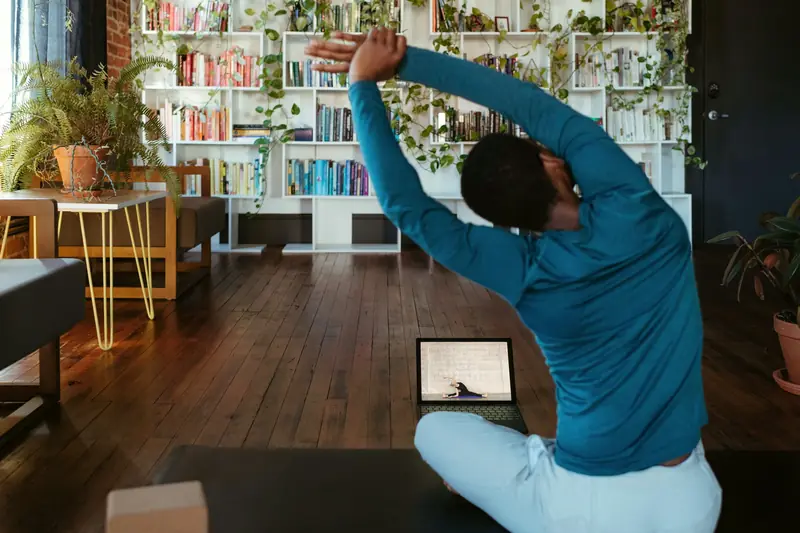
Videos and apps can be useful, but they can't see you or answer your questions. The NCCIH notes that learning yoga on your own without supervision has been associated with increased risks.
Instead: learn the foundations with a qualified teacher, whether in a live beginner class or a private session, then use recordings to practise between classes if you like.
A bonus: expecting quick results
Yoga isn't a quick fix, and changes in how you feel or move tend to be gradual. People who enjoy yoga long-term usually focus on how each practice feels, rather than chasing a particular outcome.
Instead: be patient, keep sessions enjoyable, and notice small changes along the way.
Keep learning
Mistakes are part of learning. The fact that you are thinking about practising well is a great start. For more guidance, read our beginner's guide to yoga at home and our yoga safety information, or join a beginner class where you can ask questions as you go.
This article is general information and is not a substitute for individual advice from a qualified healthcare professional.