Routines
A Simple Morning Yoga Routine for Beginners
A gentle 15-minute morning yoga routine for beginners, with clear step-by-step instructions, easier options and safety tips for stiff mornings.

A short morning practice can be a calm way to start the day. You don't need an hour, special clothing or a perfect routine: ten to fifteen minutes of simple movement is enough to get started.
This beginner-friendly routine moves gradually from lying and kneeling to standing. Take each step slowly, and use the easier options whenever you need them.
Why a morning routine?
Many people feel stiff when they first get up, and a short practice can be a gentle way to ease into movement. Health organisations also encourage adults to break up long periods of sitting; the World Health Organization notes that any amount of physical activity is better than none. A brief morning session won't transform your day on its own, but it can be a pleasant, regular habit.
What you need
- A non-slip mat or rug
- A cushion or folded blanket for your knees
- A wall or sturdy chair nearby for balance
- About 15 minutes
The routine
1. Settle and breathe (2 minutes)
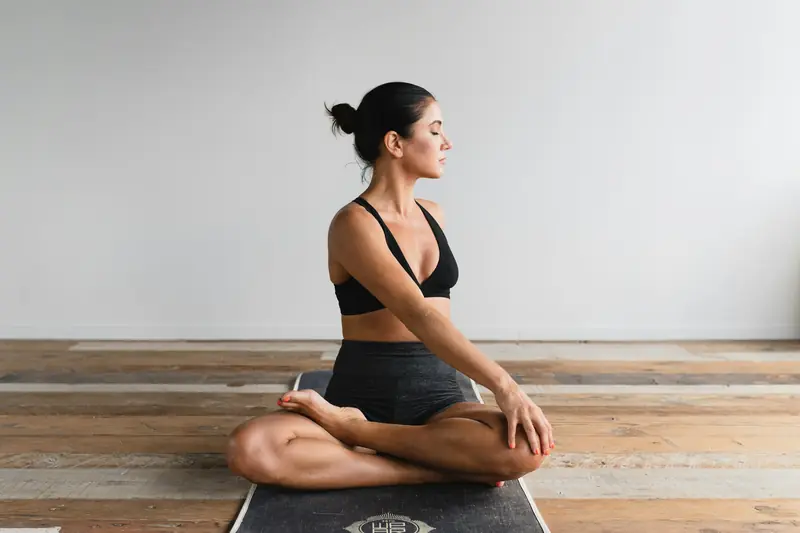
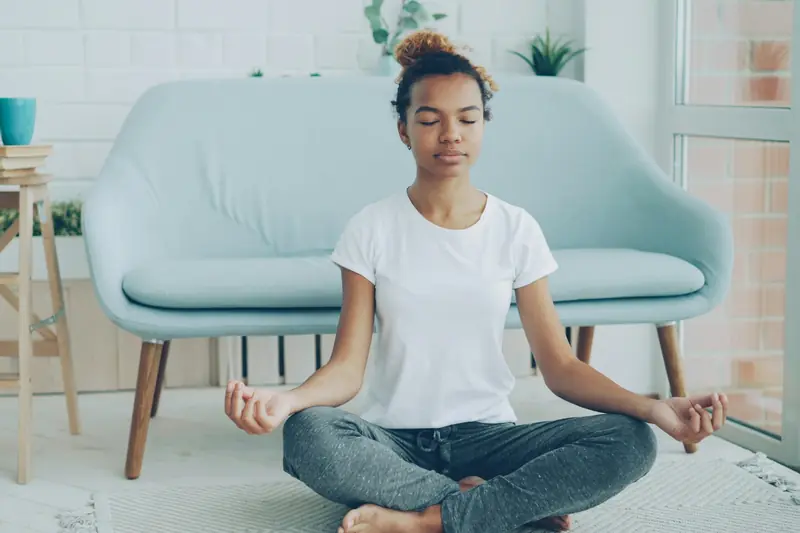
Sit comfortably, cross-legged or on a cushion, or lie on your back with your knees bent. Rest your hands on your belly. Breathe in through your nose and let your belly gently rise; breathe out slowly and let it fall. Don't force the breath. Simply notice it for a minute or two.
2. Knees to chest (1 minute)
Lying on your back, hug both knees towards your chest and rock gently from side to side. If holding both knees is uncomfortable, hug one at a time with the other foot on the floor.
3. Cat-cow (1–2 minutes)
Come onto your hands and knees, with your hands under your shoulders and knees under your hips. Pad your knees with a cushion if needed.
- Breathing in, let your belly lower and lift your gaze slightly.
- Breathing out, round your back and let your head relax down.
Move slowly for six to eight breaths, staying within a comfortable range.
4. Child's pose (1 minute)
From your hands and knees, sit your hips back towards your heels and rest your forehead on the mat or a cushion. Your knees can be together or apart. If your hips don't reach your heels, place a cushion between them. This is a resting pose you can return to at any time.
5. Low lunge with support (1 minute each side)
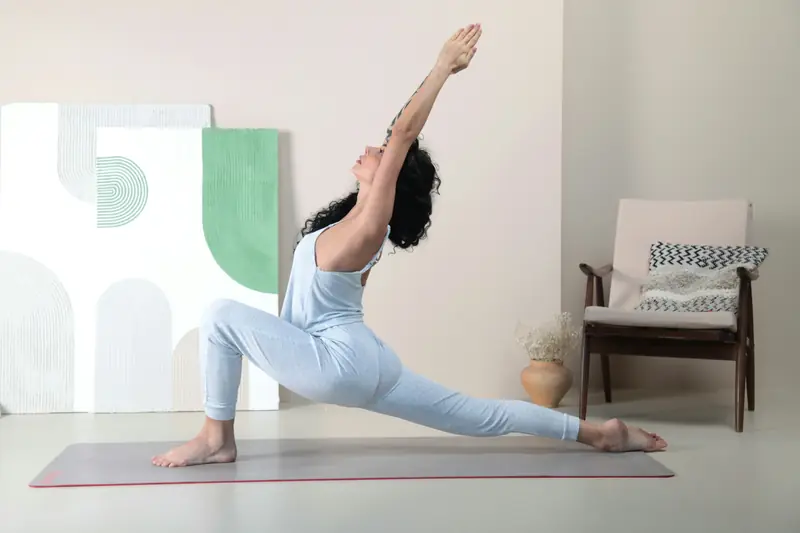
From your hands and knees, step your right foot forward between your hands. Keep your back knee on the mat (with padding) and your hands on the floor, on blocks or on a stack of books. Gently shift your hips forward until you feel a mild stretch at the front of your left hip. Hold for a few breaths, then change sides.
6. Gentle forward fold (1 minute)
Come to standing with your feet hip-width apart. With your knees softly bent, fold forward and let your arms hang or rest your hands on your thighs. To come up, bend your knees more and roll up slowly, one section of your spine at a time, with your head coming up last.
If you tend to feel light-headed when you stand up quickly, keep this fold small or skip it, and always rise slowly.
7. Mountain pose with arm raises (1 minute)
Stand tall with your weight even through both feet. As you breathe in, sweep your arms out to the sides and up; as you breathe out, lower them. Repeat five or six times, keeping your shoulders relaxed.
8. Tree pose with a wall (1 minute each side)
Stand side-on to a wall with one hand on it. Shift your weight onto your left foot and place the sole of your right foot against your left ankle, calf or inner thigh, avoiding the side of the knee. Hold for a few breaths, then change sides. Keeping the toes of your lifted foot on the floor is a perfectly good option.
9. Finish (1 minute)
Stand or sit quietly for a few breaths. Notice how you feel before you move on with your day.
Tips for making it stick
- Set up the night before. Leave your mat out so it is the first thing you see.
- Keep it short. A routine you can manage on a busy day is more useful than a long one you skip.
- Link it to something you already do, such as straight after brushing your teeth.
- Be flexible. Some mornings you'll feel energetic; on others, the first three steps might be enough.
For more ideas, see how to build a consistent yoga routine.
Want some guidance?
If you'd like a teacher to lead you, our live morning yoga classes follow a similar shape and offer options throughout. New to yoga? Start with yoga for beginners.
This article is general information and not a substitute for individual advice from a qualified healthcare professional.