Routines
Evening Yoga: Gentle Movements to Wind Down
A slow evening yoga sequence to help you mark the end of the day, with gentle floor-based stretches, a simple breathing practice and practical wind-down tips.
By the evening, many of us are carrying the day with us: tight shoulders from a laptop, a busy mind, or simply the feeling of never quite switching off. A short, slow yoga practice can be a gentle way to mark the transition from "doing" to resting.
This sequence is designed for the evening. It is mostly on the floor, avoids anything vigorous, and finishes with a simple breathing practice.
Before you begin
- Practise a little while after your evening meal rather than straight after eating.
- Dim the lights if you like, and keep a blanket nearby.
- If you are following a video, turn the brightness down, or simply listen. The NHS suggests avoiding screens for about an hour before bed, so you might prefer to learn the sequence and practise it without a screen.
- Move slowly and stay within a comfortable range. Stop if anything hurts.
The sequence (about 15 minutes)
1. Seated breathing (2 minutes)
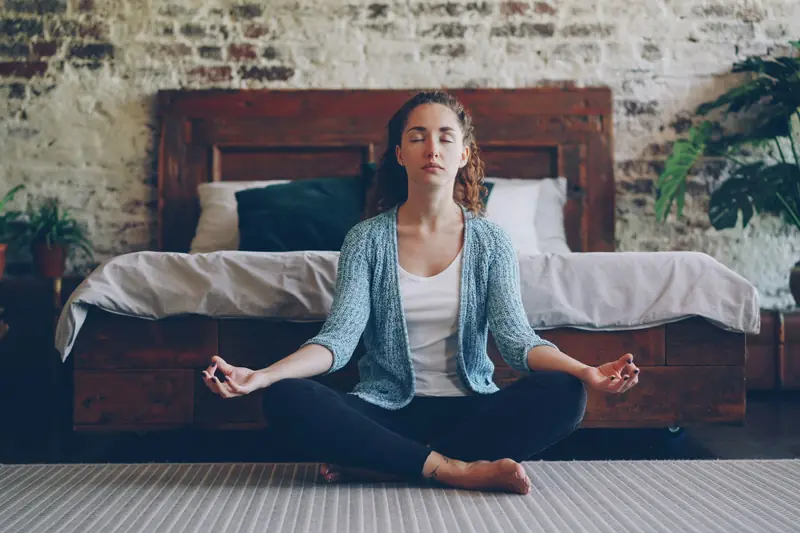
Sit comfortably on a cushion, or in a chair with your feet flat on the floor. Let your hands rest on your thighs. Breathe in through your nose and let the breath flow down into your belly, without forcing it. Breathe out slowly. You might count gently to four on each in-breath and out-breath.
2. Seated side stretch (1 minute)
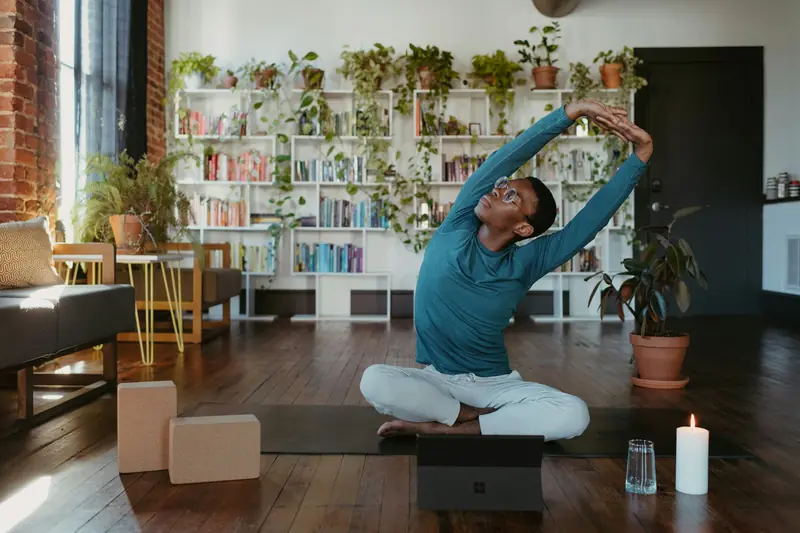
Still seated, place your left hand on the floor (or the chair seat) beside you. Reach your right arm up and lean gently to the left. Keep both sides of your waist long and your shoulders relaxed. Take three slow breaths, then change sides.
3. Shoulder and neck release (1 minute)
Roll your shoulders slowly backwards a few times. Then let your right ear move towards your right shoulder, only as far as is comfortable, and breathe. Return to centre and repeat on the left. Avoid circling your head all the way back.
4. Gentle seated twist (1 minute)
Sitting tall, place your right hand on your left knee and your left hand behind you. Breathing in, lengthen your spine; breathing out, turn gently to the left. Twist from the middle of your back rather than pulling with your arms. Return to centre and change sides.
5. Supported child's pose (2 minutes)
Kneel and sit back towards your heels, with your knees apart. Place a cushion or pillow lengthwise in front of you and rest your chest and head on it. Let your arms relax. If kneeling is uncomfortable, try the next pose instead.
6. Knees to chest and gentle rocking (1 minute)
Lie on your back and hug your knees towards your chest. Rock slowly from side to side, letting your lower back relax into the floor.
7. Reclined twist (1–2 minutes)
From your back, place your feet on the floor with your knees bent. Stretch your arms out to the sides. Let both knees lower slowly to the right, as far as is comfortable. You can place a cushion under your knees for support. Stay for a few breaths, bring your knees back to the centre, and repeat on the left.
8. Legs up the wall (optional, 3–5 minutes)
Sit sideways next to a wall, then swing your legs up the wall as you lie back. Your hips can be a little away from the wall. Rest your arms by your sides.
This is a mild inversion. Skip it, or rest with your calves on the seat of a chair instead, if you have been advised to avoid inverted positions (for example, if you have glaucoma or severe high blood pressure), are pregnant, or find it uncomfortable. When you come out, roll to your side and sit up slowly.
9. Resting breath (3 minutes)
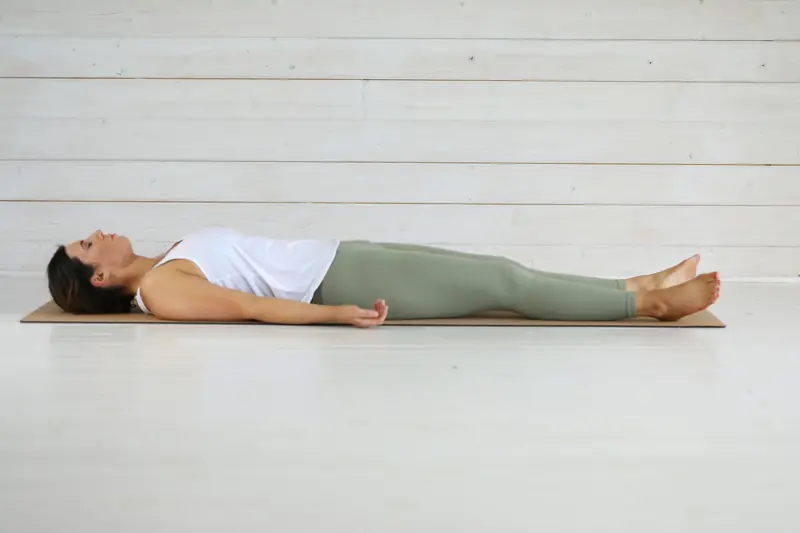
Lie on your back with your knees bent or supported by a pillow, and cover yourself with a blanket. Rest one hand on your belly. Breathe in gently through your nose, and out through your mouth, letting each out-breath be slow and unhurried. If your mind wanders, which it will, simply come back to the feeling of the breath.
When you are ready, roll to one side and come up slowly.
Building an evening wind-down
Yoga is only one part of winding down. The NHS Every Mind Matters guidance also suggests keeping a regular bedtime routine, avoiding screens for about an hour before bed, and writing down any worries or to-dos so they are out of your head.
You might try:
- ten minutes of this sequence, then reading a book,
- a few minutes of the breathing practice on its own on busy evenings, or
- a weekly live evening class to keep you consistent.
Keep it gentle
Evening practice isn't the time to work on challenging poses. If you notice yourself pushing, ease back. The aim is to finish feeling a little calmer than when you started.
Practise with us
Our evening yoga classes follow a similar slow pace with a long guided relaxation, and our relaxation and stress management class focuses on breathing and rest. Read our yoga safety information before you start.
This article is general information and not a substitute for individual advice from a qualified healthcare professional.